
A deck that goes into a Vermont winter unchecked is carrying more risk than most homeowners realize — snow load, ice, and repeated freeze-thaw cycles all put stress on a structure that summer weather never tests. Four checkpoints cover most of what matters: structural condition, surface protection, railing and stair safety, and an honest repair-versus-replace assessment.
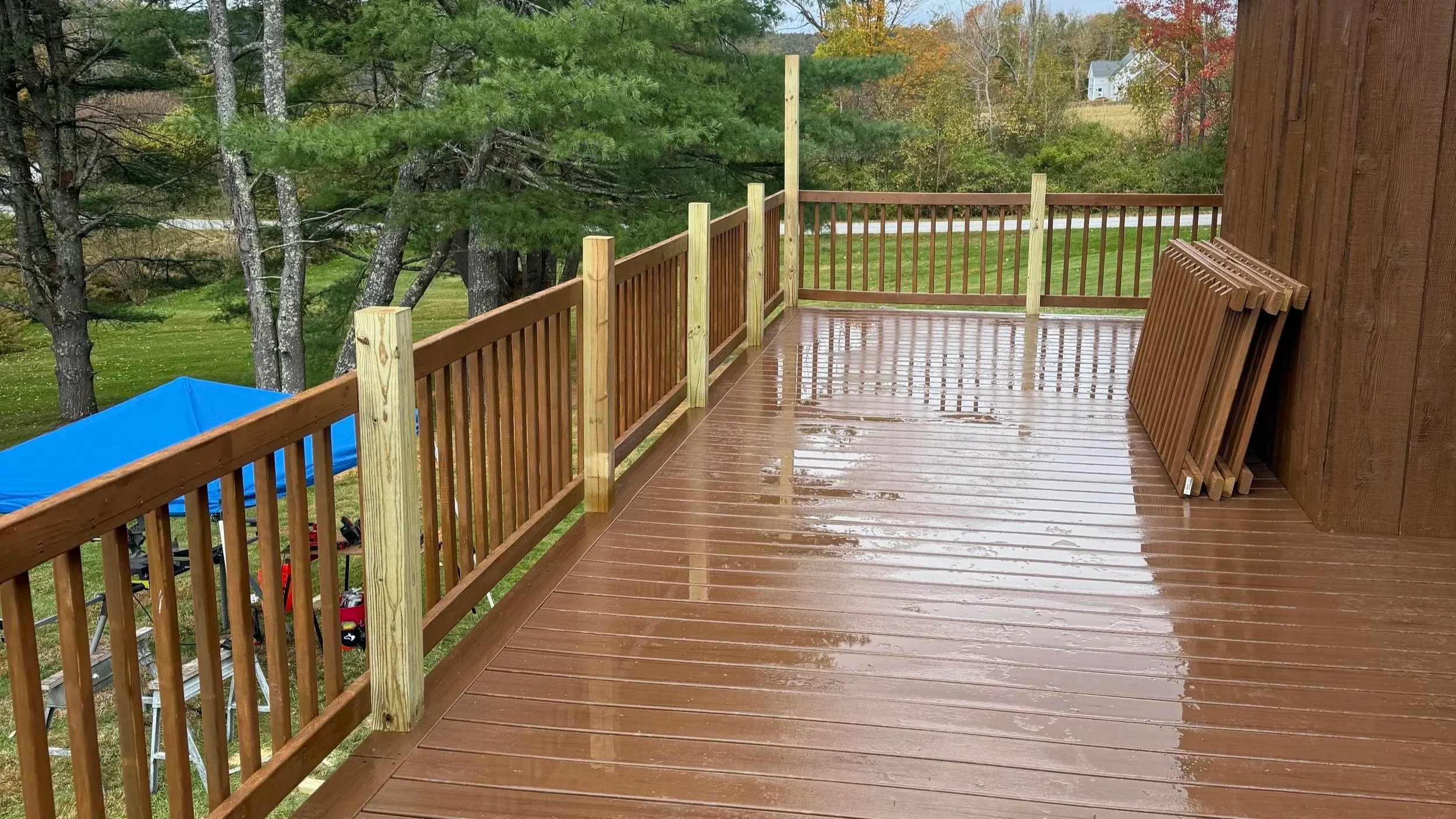
Reading the Structure, Not Just the Surface
Snow is heavier than it looks, and a deck with an existing weak point — a rotted board, a backed-out fastener, a wobbling post — is far more likely to fail under that load than one that's been checked beforehand. Evergreen Property Care's fall inspection includes walking the full deck surface and, where accessible, checking underneath it for soft spots at the ledger board connection, discoloration around joist hangers, and any fasteners that have started to work loose. The ledger board — the piece that attaches the deck to the house — is a particularly important place to check, since flashing failures there are a leading cause of hidden rot.
Cleaning and Sealing Before the Snow Arrives
Leaves and debris trapped between deck boards hold moisture directly against the wood, accelerating rot precisely in the gaps that are hardest to inspect visually. A thorough cleaning, followed by fresh sealant where the finish has worn thin, helps the wood shed moisture through the wettest stretches of a Vermont year — freeze-thaw cycles in late fall and again through mud season.
Railings and Stairs: Where Risk Concentrates in Winter
A railing that's merely loose in July becomes a genuine fall hazard once the deck surface turns to ice. Every railing post and stair stringer connection should be checked for movement and tightened or repaired before the first accumulating snow, since winter conditions turn a minor structural annoyance into a safety issue.
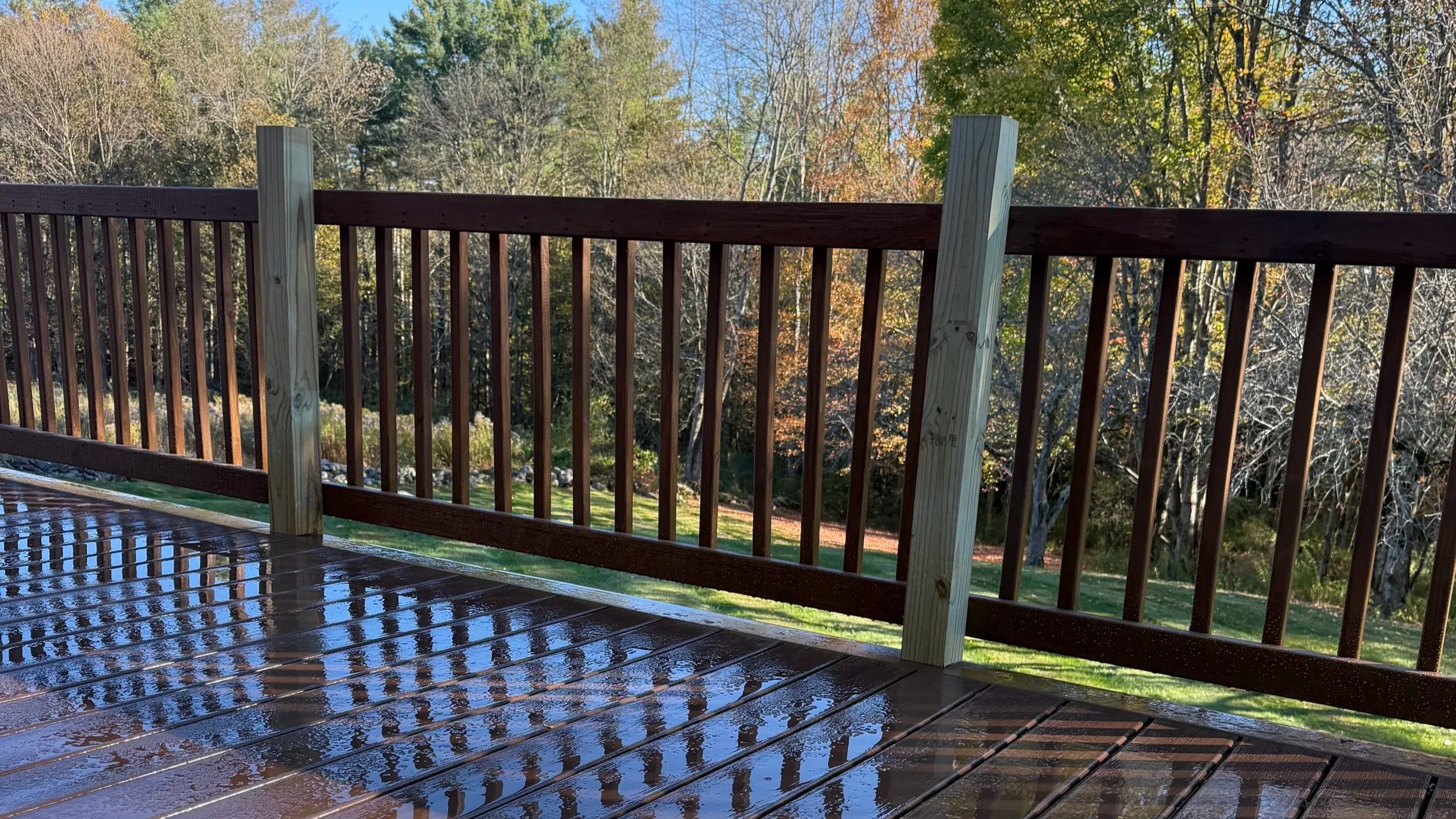
Repair or Replace: How to Tell the Difference
Isolated rot in a few surface boards is typically a straightforward repair. But when rot has reached structural framing members — joists, the ledger board, or support posts — rather than staying confined to surface decking, ongoing patch repairs often end up costing more over the life of the deck than a full replacement would have. Most pressure-treated wood decks have a functional lifespan in the range of 15 to 20 years before structural replacement becomes the more economical path; a fall inspection is a reasonable time to gauge where a given deck sits in that range.
Frequently Asked Questions
How often should a deck be resealed in Vermont?
Most decks benefit from resealing every one to three years, depending on wood species, sun exposure, and wear — a fall inspection is a good moment to check whether it's due.
Is it safe to leave snow on a deck all winter?
Light, dry snow generally isn't a concern, but heavy, wet accumulation should be cleared periodically, especially on any deck with known structural questions, since the added weight compounds quickly.
How do I know if my deck needs full replacement rather than repair?
If rot has reached structural framing members rather than staying confined to surface boards, or the deck is approaching the upper end of its typical 15–20 year lifespan, replacement is usually the more cost-effective long-term choice.
Does Evergreen Property Care handle both deck repair and full replacement?
Yes — Evergreen Property Care offers both deck construction and deck repair, and can recommend the right path after an in-person inspection.
Want a deck assessment before winter arrives? Evergreen Property Care offers free estimates for homeowners across Rutland and Windsor County, including Killington, Mendon, Pittsfield, and Bridgewater — a fall inspection is the easiest way to get ahead of the snow.