
Driveway Safety Tips for Snowy Conditions
A slippery driveway is more than an inconvenience—it’s a liability, a maintenance headache, and a fast track to surface damage if handled incorrectly. During snow and ice season, driveways endure repeated freeze–thaw cycles, vehicle traffic, foot traffic, and mechanical clearing. When safety strategies are improvised instead of planned, the results often show up as cracked pavement, damaged edging, refrozen ice sheets, or preventable injuries.
Keeping driveways safe requires a systems-based approach that balances traction, drainage, surface protection, and timing. The goal isn’t just to clear snow—it’s to maintain reliable access while preserving the driveway itself through the harshest months of the year. This guide breaks down proven strategies that homeowners and property owners can use to reduce risk and avoid costly repairs.
Why Driveway Safety Fails in Winter
Most winter driveway problems aren’t caused by heavy snowfall alone. They stem from compaction, refreezing, and water mismanagement. Snow that is driven on before removal compresses into dense layers. Meltwater from daytime sun refreezes overnight. Ice control products are applied reactively, sometimes damaging the surface they’re meant to protect.
Over time, these patterns create predictable failure points:
Polished ice sheets that resist traction
Surface scaling and spalling on concrete
Edge damage to asphalt and pavers
Drainage blockages that refreeze repeatedly
A safe driveway is the result of intentional sequencing, not brute force.
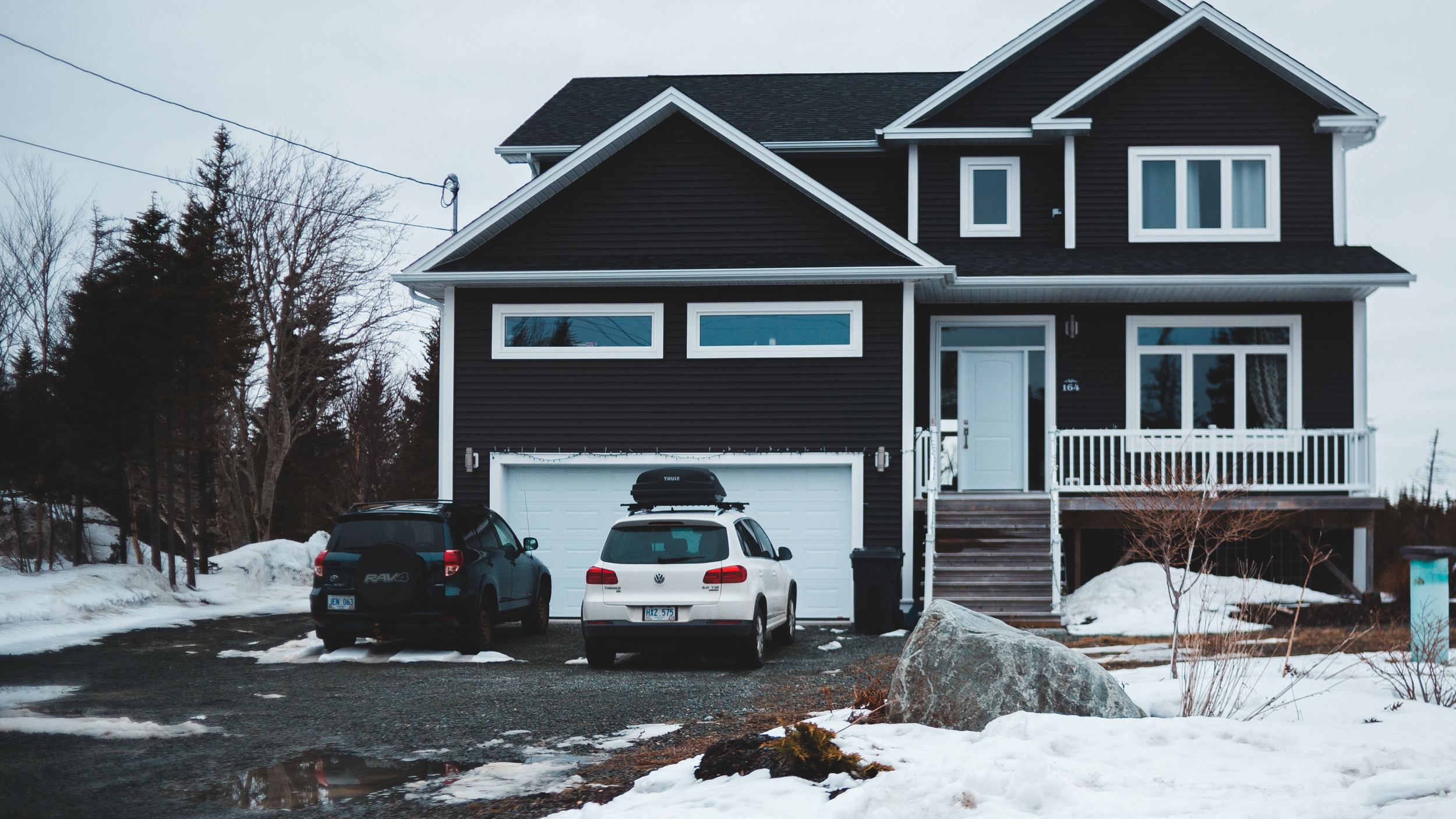
Start With Surface Awareness
Different driveway materials respond differently to winter conditions. Safety strategies should always account for what lies beneath the snow.
Asphalt is flexible but vulnerable to edge damage and gouging. Concrete is durable but susceptible to chemical attack and freeze-related spalling. Pavers rely on joint integrity and proper base support, making them sensitive to aggressive scraping and improper de-icing.
Understanding these differences informs every decision—from tool selection to ice control chemistry—and helps prevent winter maintenance from turning into spring repairs.
Timing Is the Most Powerful Safety Tool
The safest driveway is one that never allows snow to bond to the surface. Early, incremental clearing prevents compaction and reduces the need for aggressive ice control later.
Clearing during snowfall, or immediately after, limits base-layer formation. Once a thin layer freezes to the surface, removal becomes exponentially harder and riskier. Vehicles compact snow into dense mats that polish into ice, creating hazardous conditions that persist for days.
Consistency matters more than intensity. Multiple light clears outperform delayed, heavy efforts.
Plowing and Shoveling Without Surface Damage
Aggressive scraping may feel effective, but it often causes long-term harm. Metal blades set too low can chip concrete, peel asphalt edges, and dislodge pavers.
Best practice involves setting blades slightly above grade and using tools appropriate for the surface. Marking driveway edges before the season begins helps prevent accidental damage when visibility is limited.
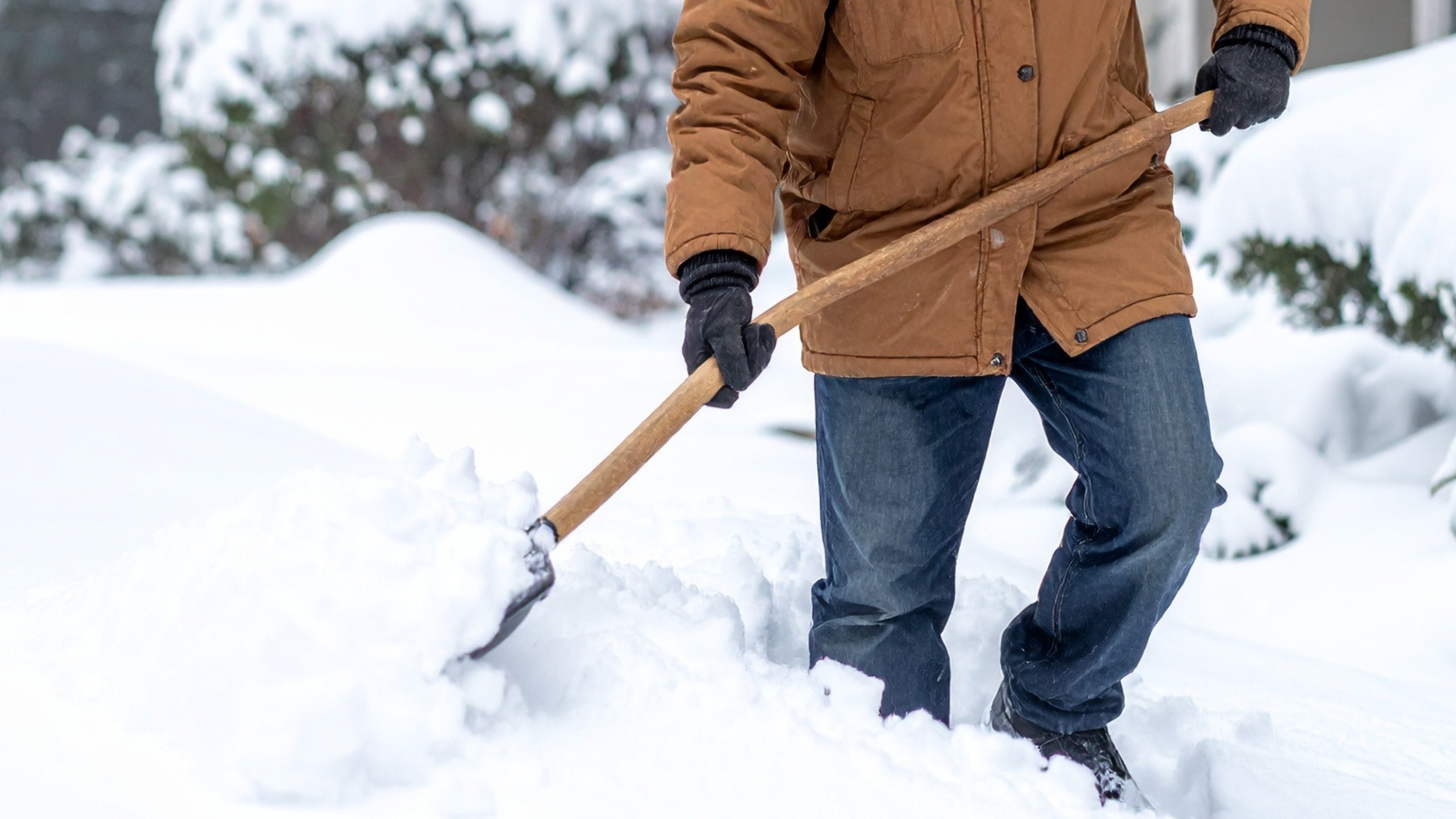
Manual shoveling should follow the same principle: remove snow efficiently without grinding tools into the surface.
Ice Control: Traction Without Destruction
Not all ice control products are equal. Traditional rock salt is inexpensive and fast-acting, but it is also corrosive, damaging to concrete, and harmful to adjacent landscaping.
Calcium-based alternatives are generally less destructive and effective at lower temperatures. Blends designed to minimize chloride exposure offer safer long-term performance for both people and surfaces.
The key is moderation. Over-application does not improve safety and often accelerates surface deterioration. Proper timing and targeted application provide traction without chemical overload.
Drainage Is a Safety Feature
Snow piles placed at the base of slopes, near garage thresholds, or along drainage paths trap water that refreezes overnight. Over time, this creates ice sheets that no amount of salt can permanently solve.
Effective snow placement preserves drainage channels and prevents meltwater from cycling back onto the driveway.
Managing Slopes, Transitions, and High-Risk Zones
Sloped driveways, apron transitions, and garage thresholds demand special attention. These areas experience higher runoff, more compaction, and faster refreezing.
Extra traction measures, more frequent clearing, and careful snow placement reduce risk where gravity works against you. Ignoring these zones is one of the most common reasons driveways remain hazardous despite regular clearing.
Lighting and Visibility Matter
Safety isn’t only about traction. Poor visibility increases the likelihood of slips, vehicle misalignment, and missed ice patches.
Adequate lighting along driveways improves nighttime safety and helps identify problem areas early. Reflective markers and edge indicators assist both drivers and plow operators during storms.
Visibility planning is a low-cost, high-impact safety upgrade.
Landscaping’s Role in Driveway Safety
Landscaping influences winter safety more than many property owners realize. Overgrown edges, buried drains, and unmarked features complicate snow removal and drainage.
Seasonal maintenance before winter—such as trimming back vegetation, marking features, and clearing drainage—supports safer snow operations and reduces ice buildup near driveways.
Damage to lawns and beds often originates from winter snow placement decisions rather than spring conditions.
Driveway Safety for Rental and Airbnb Properties
Properties with guests or tenants face higher expectations and liability exposure. A slippery driveway can disrupt arrivals, lead to complaints, or result in injuries.
Reliable driveway safety for rentals depends on proactive clearing schedules, documented response times, and consistent surface treatment. Guests should never be expected to navigate untreated ice or guess where it’s safe to park.
For property owners managing remotely, dependable local support is essential during snow and ice season.
When Professional Support Makes Sense
Snow and ice management can overwhelm even well-prepared homeowners during prolonged winter cycles. Professional services provide predictable timing, appropriate equipment, and experience tailored to surface protection and safety.
Evergreen Property Care supports driveway safety through structured snow removal, ice management, and seasonal property care. Their approach emphasizes risk reduction, surface preservation, and coordination with broader winter maintenance needs.
Safety Today Prevents Repairs Tomorrow
A safe driveway is the product of foresight, not reaction. Thoughtful snow removal, targeted ice control, proper drainage, and surface-aware techniques work together to reduce risk throughout the season.
When winter ends, the benefits are clear: fewer repairs, intact surfaces, and safer access for everyone who uses the property.
CLICK HERE to Schedule or Reach out to us at (802) 444-1372 or info@evergreenpropertycare.com